

Our journey towards a more sustainable future.

As a leader in information management, we understand our responsibility to tackle environmental challenges and minimise our impact on the planet and the communities we serve. 

Our commitment to environmental sustainability.

We undertake all activities mindful of protecting and conserving the natural environment, reducing pollution, and ensuring employee health. Our commitment to sustainability is reflected in our efforts to establish and review measurable objectives and targets annually.

Low emission vehicles.

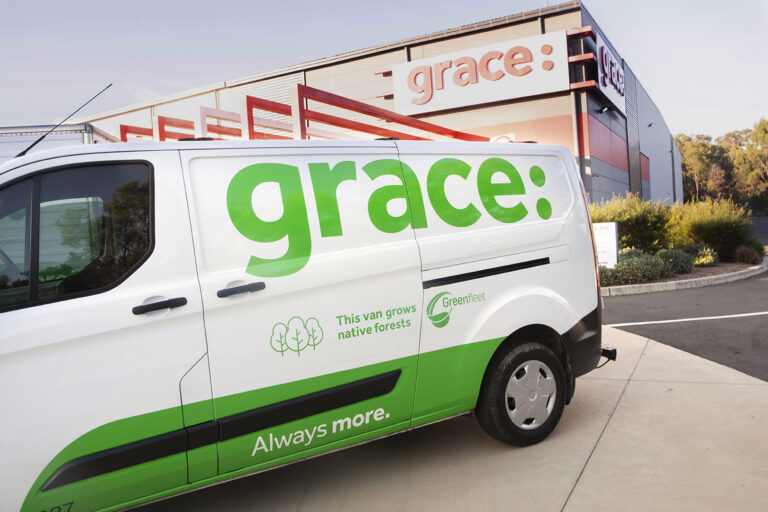
Grace is committed to reducing the environmental impact of our transport operations through a continual fleet improvement program and more efficient service delivery models. Across our national network, we are progressively transitioning to lower-emission vehicles, including Euro 5 or higher compliant vehicles, while optimising delivery routes to reduce unnecessary travel and fuel consumption.

In partnership with Greenfleet, Grace also supports native reforestation initiatives to help offset emissions generated by our vehicle fleet. This approach forms part of our broader commitment to environmentally responsible operations and sustainable business practices

Native reforestation.

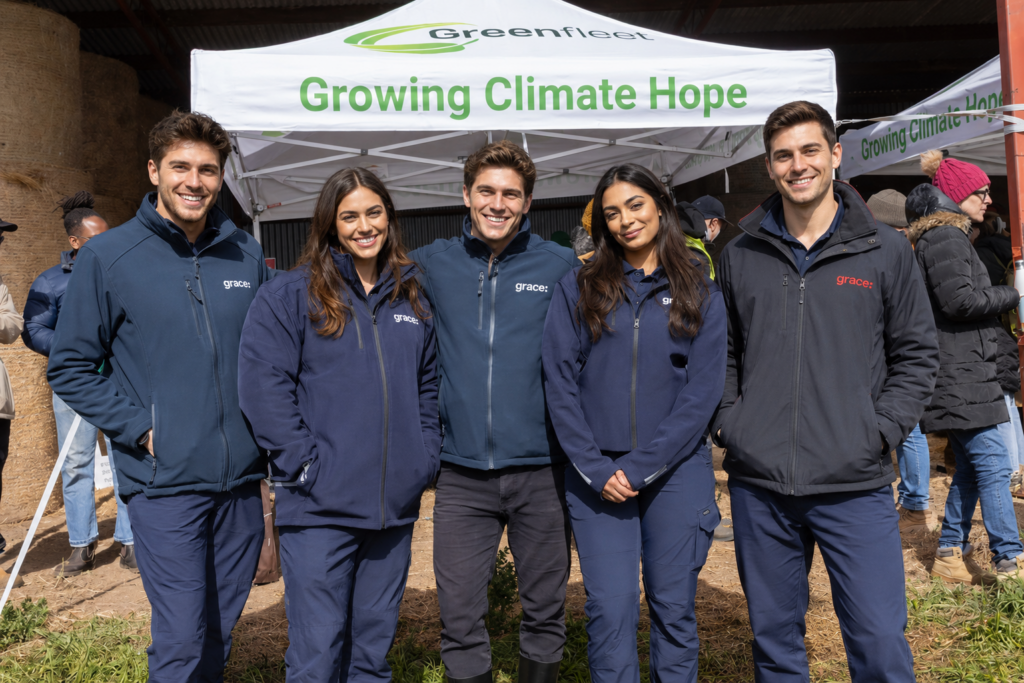
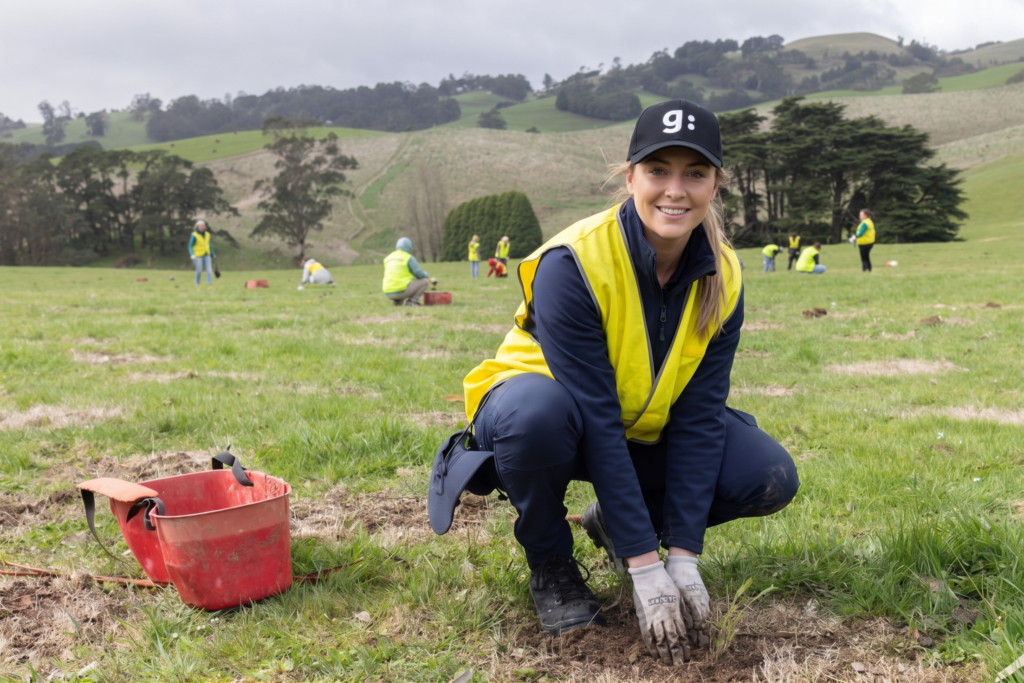
Grace proudly partners with Greenfleet to support native reforestation projects across Australia. Through this partnership, we contribute to the restoration of biodiverse native forests that help remove carbon from the atmosphere while creating vital habitats for native wildlife.

Our support extends beyond carbon offsetting. Greenfleet’s projects also assist in improving biodiversity, reducing soil erosion, protecting waterways, and restoring ecosystems impacted by deforestation and bushfires.

In 2025, Grace offset 4,278.99 tonnes of carbon through native reforestation initiatives with Greenfleet, supporting long-term environmental restoration projects across Australia.

Renewable energy.

Grace continues to invest in initiatives that improve energy efficiency and reduce greenhouse gas emissions across our operations. This includes upgrading facilities with energy-efficient LED lighting and implementing smarter energy management practices throughout our offices and warehouses.

We have also introduced renewable energy initiatives, including water recycling, solar panel installations at selected sites, as part of our ongoing commitment to reducing our environmental footprint and supporting a more sustainable future.

Environmental sustainability remains a key consideration in how we design, manage, and improve our operational infrastructure.

Waste minimisation.

Grace is committed to reducing waste and supporting sustainable disposal practices across our operations. Through secure destruction, recycling, and recovery programs, we help minimise landfill while ensuring materials are handled responsibly and compliantly.

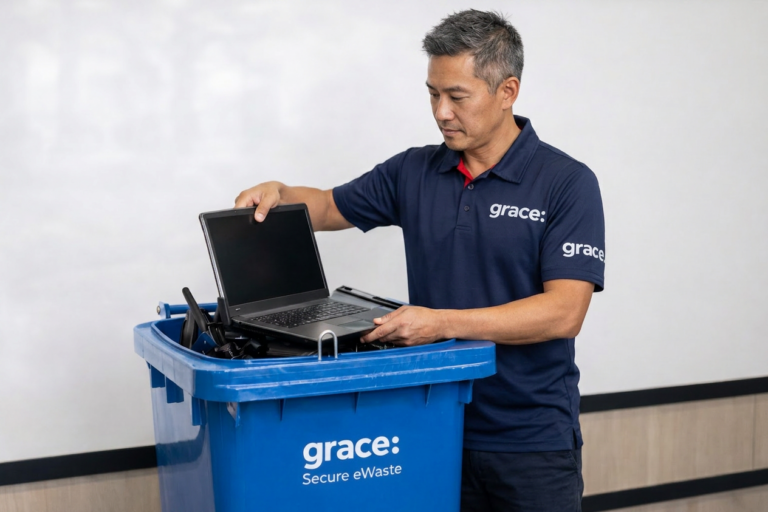
Paper records are securely shredded and recycled into new paper products, while electronic equipment is processed through certified e-waste recycling programs to recover reusable materials and prevent harmful waste from entering landfill.

We also support customers in reducing paper dependency through digitisation and secure information management solutions that promote more sustainable ways of working.

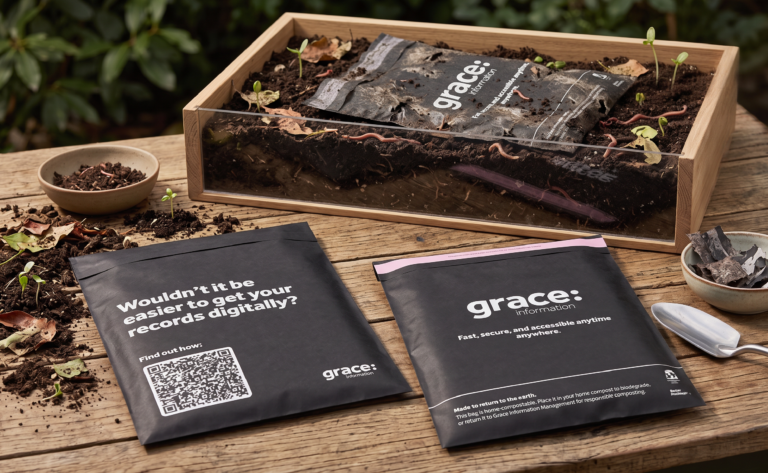
Compostable file retrieval rouches.

As part of Grace’s commitment to environmental sustainability, we have introduced compostable file retrieval pouches to replace traditional plastic alternatives.

Designed with a dual self-seal system, the pouches can be reused for customer file returns before being composted at end of life, reducing waste while maintaining durability and security during transit.

Independent Life Cycle Analysis shows compostable packaging generates significantly lower greenhouse gas emissions than recycled and virgin paper alternatives, helping support a lower-carbon future.

Certified home and industrially compostable, the pouches are BPA-free, non-toxic, and biodegrade within months under composting conditions.

Promoting a culture of responsibility.

We believe that a sustainable business must prioritise the wellbeing and development of its employees, partners, and clients. Adopting a safety-first approach, treating everyone with dignity, recognising the individual contributions of our team, and attentively listening to the needs of our customers are essential to a successful workplace culture.

41%

Female participation rate.

The transport, logistics, and warehousing sector has traditionally been male dominated. At Grace, we’re proud to have increased our Group’s female representation to 41%, significantly higher than the national average of 27%, according to ABS and WGEA.

-1.2%

Median gender pay gap.

The GCW Group is proud to be one of the few organisations in Australia with a median base salary gender pay gap that favours women. In contrast, the average pay gap in the transport, logistics, and warehousing sector is 9.9% in favour of men.

23%

Reduction in lost time injuries.

By proactively managing hazards and risks, we are building a stronger workplace safety culture. In 2023, this approach led to a 16.5% increase in participation in our Injury Prevention Program and a 23% reduction in lost time injury claim payments.

>50%

Nationalities representation.

The GCW team represents over 50 nationalities, reflecting the diverse communities we serve. We are committed to fostering respect and celebrating cultural diversity through initiatives like International Harmony Day.

Download our Grace Group ESG Report.

Get a moving quote